Unlocking Better Health: The Crucial Role of Your Cervical Curve and How Symmetry Health Center in Alameda and Oakland Can Help
In our screen-heavy, desk-bound lives, neck pain, headaches, and that nagging tension in your shoulders have become unwelcome companions for many. If you’re in Alameda or Oakland and dealing with chronic discomfort, you’re not alone—but what if the key to relief lies in something as fundamental as the curve of your neck? At Symmetry Health Center, we specialize in uncovering these hidden contributors to pain and disease, helping patients reclaim their vitality through targeted, non-invasive care. Today, we’re diving into the importance of the cervical curve (also known as cervical lordosis) in overall health and human disease, backed by peer-reviewed research. We’ll explore why maintaining this vital “arc of life” matters and how our clinics in Alameda and Oakland use Chiropractic Biophysics® (CBP®) technique for a conservative path to restoration—without the risks of surgery.
What Exactly Is the Cervical Curve?
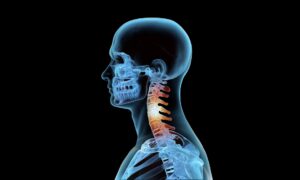
Your spine isn’t a straight rod; it’s a series of elegant curves designed by evolution to support your body efficiently. The cervical curve refers to the natural inward (lordotic) arch in the neck, formed by the seven vertebrae (C1-C7) that connect your skull to the rest of your spine. This curve isn’t just aesthetic—it’s a biomechanical marvel.
Think of your head as a 10- to 12-pound bowling ball balanced atop a pin. Without the cervical curve, that weight would strain your neck muscles, ligaments, and discs, leading to fatigue, pain, and eventual breakdown. A healthy curve absorbs shocks from daily activities like walking or turning your head, while protecting the delicate spinal cord and nerve roots that run through it. When this curve flattens or reverses (a condition called hypolordosis or kyphosis), it sets off a cascade of issues that can ripple through your entire body.
Why the Cervical Curve Matters: Beyond Posture to Disease Prevention
A well-maintained cervical curve is foundational to health, influencing everything from mobility to organ function. Research shows that its integrity directly impacts neurological, musculoskeletal, and even systemic well-being. Here’s why prioritizing your cervical spine health could be a game-changer:
1. Protects Against Chronic Pain and Neuromusculoskeletal Disorders
Loss of cervical lordosis is a silent saboteur, linked to a host of painful conditions. It increases stress on the vertebrae, accelerating wear and tear that can lead to degenerative disc disease, herniations, and pinched nerves. This often manifests as:
– Persistent neck pain and stiffness.
– Radiating arm pain (radiculopathy) or numbness.
– Tension headaches that feel like a vice grip.
Studies confirm that straightening of the cervical curve correlates with reduced quality of life, including higher rates of disability. In fact, restoring the curve has been shown to relieve chronic headaches and neck pain, even in younger patients. At Symmetry Health Center, we’ve seen countless patients in our Alameda and Oakland locations transform from daily sufferers to active, pain-free individuals by addressing this curve.
2. Supports Essential Physiological Functions
The cervical curve isn’t isolated—it’s integral to how your body operates. It facilitates efficient head movement for breathing, swallowing, speaking, and even eye coordination. A meta-analysis of asymptomatic individuals highlights its role in optimizing processes like mastication (chewing), vocalization, and gaze stability. When compromised, it can contribute to broader issues:
– Respiratory challenges: Poor alignment may subtly impair diaphragm function.
– Neurological strain: Nerves exiting the cervical spine control arm and hand function; disruption here links to conditions like thoracic outlet syndrome.
3. Links to Broader Health and Disease Risks
Emerging evidence ties cervical misalignment to systemic problems. Forward head posture—a common culprit in curve loss—shifts your center of gravity, overloading the spine and promoting inflammation. Over time, this can exacerbate:
– Cardiovascular strain: Increased neck tension may elevate blood pressure.
– Digestive and hormonal imbalances: Via the vagus nerve, which runs through the cervical region.
– Accelerated aging: Chronic stress on spinal discs hastens osteoarthritis and related diseases.
The primary issues from curve loss fall into categories like muscle imbalances, joint dysfunction, and nerve compression, underscoring its role in preventive health. Maintaining this curve isn’t optional—it’s essential for long-term vitality.
Peer-Reviewed Insights: Measuring and Restoring Cervical Balance
To truly appreciate the cervical curve’s role, we turn to science. A comprehensive literature review published in the European Spine Journal examines the parameters critical for assessing cervical sagittal balance—the harmonious alignment that includes your lordotic curve. Titled Which parameters are relevant in sagittal balance analysis of the cervical spine? A literature review” by Fong Poh Ling and colleagues, the study stresses: “It is important for surgeons to have reliable, simple and reproducible parameters to analyze the cervical spine.”
Key takeaways from the review:
– C7 or T1 Slope: Averages 20° and should not exceed 40° to ensure proper head positioning.
– cSVA (Cervical Sagittal Vertical Axis): Mean value of 20 mm; deviations beyond 40 mm signal imbalance.
– SCA (Spino-Cranial Angle): Norm of 83° ± 9°, highly correlated with cervical lordosis for global spinal harmony.
The authors conclude that focusing on these metrics yield “good clinical outcomes,” correlating improvements with enhanced quality of life. This isn’t abstract theory—it’s a roadmap for clinicians like us at Symmetry Health Center to diagnose and treat effectively.
A Conservative Path Forward: Chiropractic Biophysics® at Symmetry Health Center
While surgery might seem like a quick fix for severe cases, it carries risks like infection, scarring, and incomplete recovery. At our clinics in Alameda and Oakland, we champion Chiropractic Biophysics® (CBP®)—a evidence-based, non-surgical technique that precisely targets spinal alignment, including the cervical curve. Developed through decades of research, CBP® uses customized adjustments, traction, and exercises to gently restore lordosis, often achieving results where traditional chiropractic falls short.
Unlike invasive procedures, CBP® is:
– Gentle and Drug-Free: Ideal for all ages, with minimal downtime.
– Holistic: Addresses posture, lifestyle, and biomechanics for lasting change.
– Proven: Studies show it reduces pain and improves curve measurements, mirroring the parameters in the Fong review.
Patients at Symmetry Health Center report not just pain relief, but renewed energy and mobility. One Alameda client shared, “After years of headaches, my neck curve was restored in months—no knife needed!”
Take the First Step Toward a Healthier Curve
Your cervical curve is more than anatomy—it’s the gateway to pain-free living and disease prevention. Don’t let misalignment dictate your days. Whether you’re in Alameda, Oakland, or nearby, Symmetry Health Center is here with personalized CBP® care tailored to you.
Ready to realign? Schedule your consultation today at our Alameda location (call 510-769-0125) or Oakland clinic (510-654-2207). Visit (https://symmetryhealthcenter.com) for more on cervical spine health in Alameda and Oakland. Your healthier tomorrow starts with the curve of your neck—let’s restore it together.
Symmetry Health Center: Restoring Balance, One Curve at a Time.
Ling FP, Chevillotte T, Leglise A, Thompson W, Bouthors C, Le Huec JC. Which parameters are relevant in sagittal balance analysis of the cervical spine? A literature review. Eur Spine J. 2018 Feb;27(Suppl 1):8-15. doi: 10.1007/s00586-018-5462-y. Epub 2018 Jan 13. PMID: 29332239.